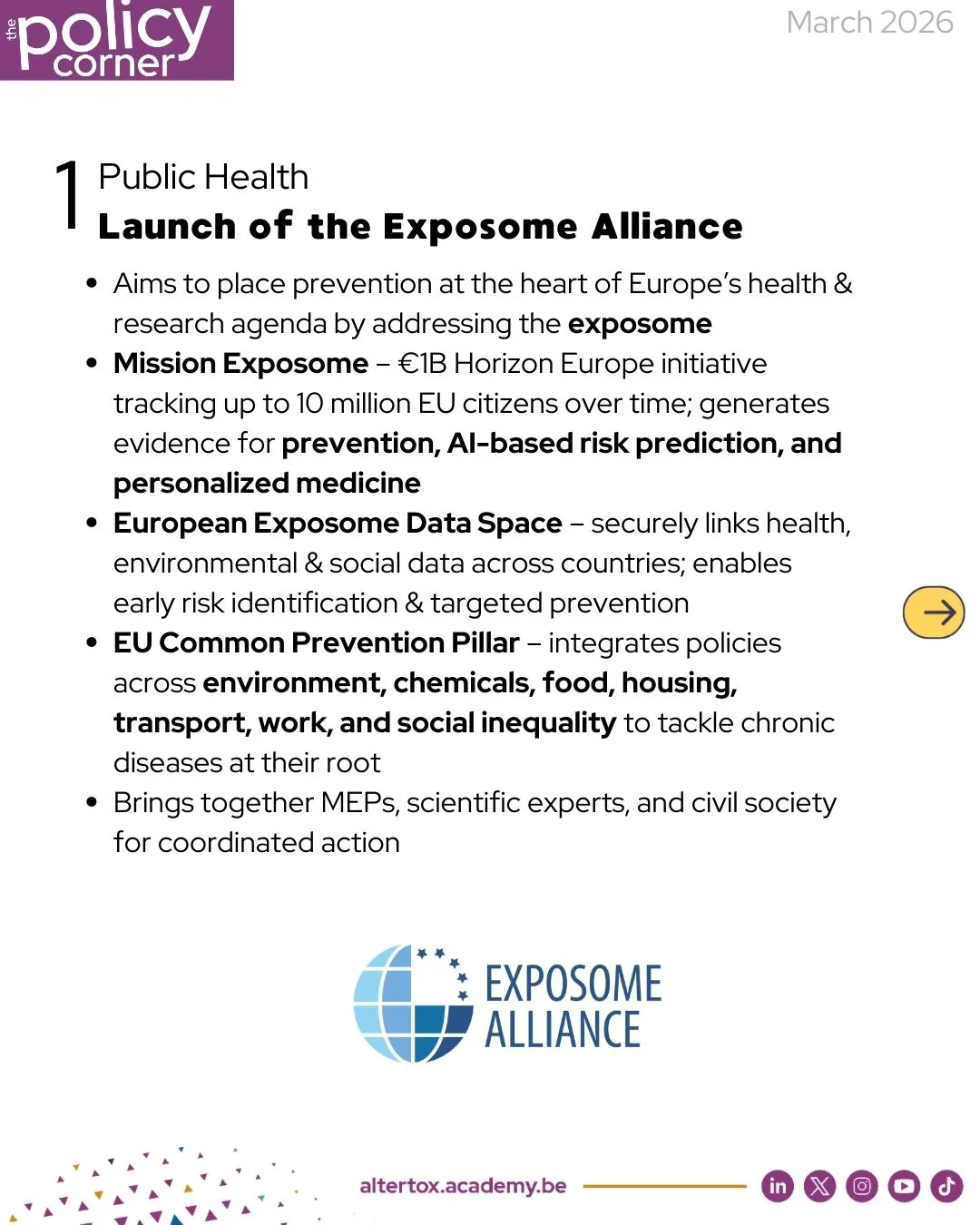
Public Health: Launch of the Exposome Alliance
- Aims to place prevention at the heart of Europe's health & research agenda by addressing the exposome
- Mission Exposome - €1B Horizon Europe initiative tracking up to 10 million EU citizens over time; generates evidence for prevention, AI-based risk prediction, and personalized medicine
- European Exposome Data Space - securely links health, environmental & social data across countries; enables early risk identification & targeted prevention
- EU Common Prevention Pillar - integrates policies across environment, chemicals, food, housing, transport, work, and social inequality to tackle chronic diseases at their root
- Brings together MEPs, scientific experts, and civil society for coordinated action
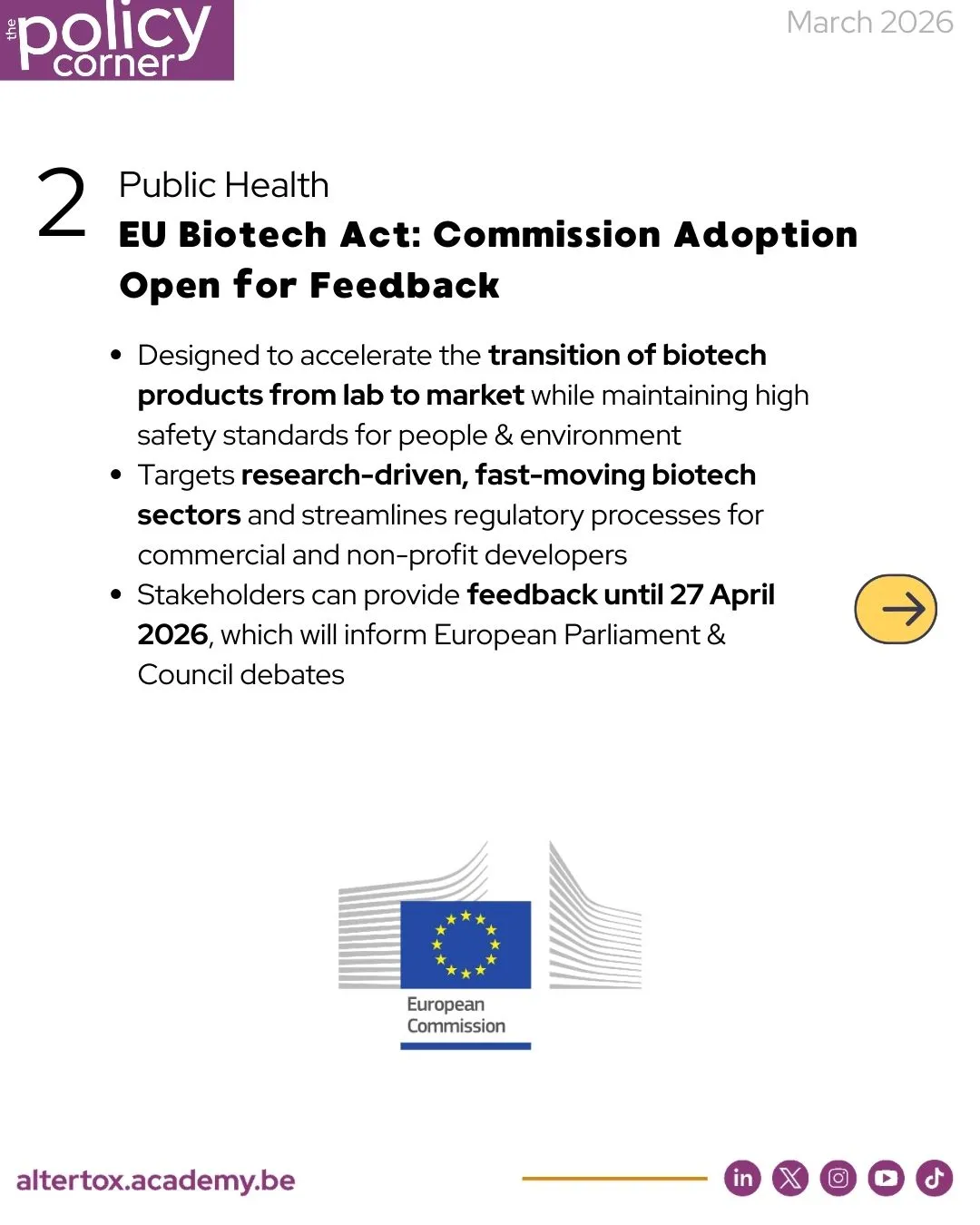
Public Health: EU Biotech Act: Commission Adoption Open for Feedback
- Designed to accelerate the transition of biotech products from lab to market while maintaining high safety standards for people & environment
- Targets research-driven, fast-moving biotech sectors and streamlines regulatory processes for commercial and non-profit developers
- Stakeholders can provide feedback until 27 April 2026, which will inform European Parliament & Council debates
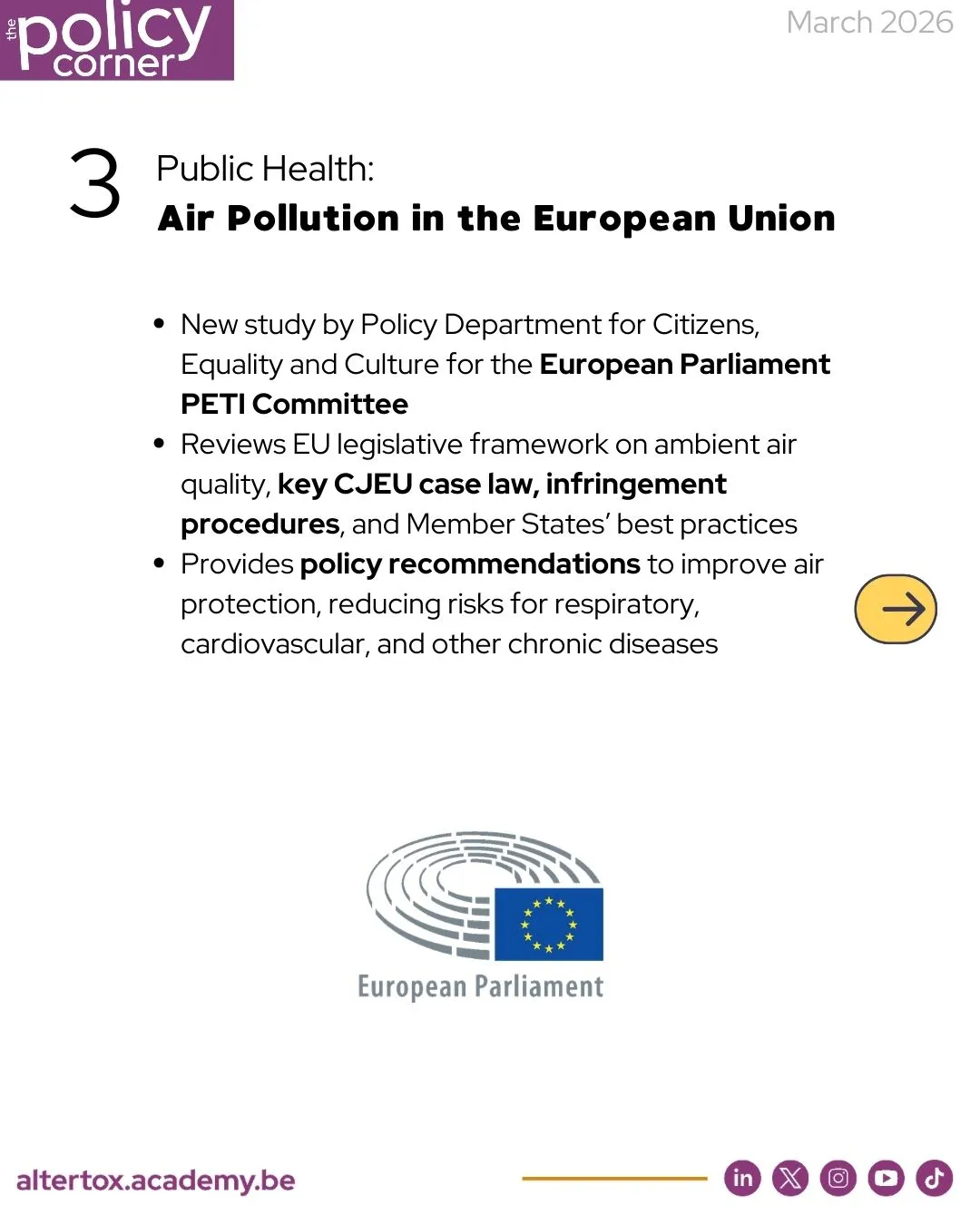
Public Health: Air Pollution in the European Union
- New study by Policy Department for Citizens, Equality and Culture for the European Parliament PETI Committee
- Reviews EU legislative framework on ambient air quality, key CJEU case law, infringement procedures, and Member States' best practices
- Provides policy recommendations to improve air protection, reducing risks for respiratory, cardiovascular, and other chronic diseases
Chemicals: Governing Prediction: A material political economy of the computational toxicology market
- Examines how computational toxicology evolved under REACH and why the OECD QSAR Toolbox became the most widely used tool
- Commercial QSAR models promised statistical predictions but were expensive, opaque, and rarely used in REACH dossiers
- The public Toolbox ecosystem prioritized transparent read-across, shared data, co-development with regulators, and SME accessibility
- Shows that digitalization of chemical assessment was shaped by deliberate political and material interventions, not just technology
Chemicals: Transforming the way we assess chemicals for their potential to cause cancer
- European Commission JRC drives human-relevant, animal-free methods to assess chemicals' cancer potential
- Integrates human cells, advanced models, computational analyses to support faster, efficient, and humane safety assessments
- Co-chairs EPAA carcinogenicity team, contributes to European roadmap to phase out animal testing, and leads work on mutagenicity & non-genotoxic carcinogens
- Collaborates with OECD to develop frameworks for chemicals that trigger cancer without DNA damage
Chemicals: ECHA Single Programming Document 2026-2028
- Outlines an expanded mandate to protect health & environment while supporting sustainable innovation
- Key priorities: REACH ex-ante SME verification, One Substance One Assessment (OSOA)
- Promotes development, validation, and regulatory uptake of NAMs; supports Member State-stakeholder cooperation structures
- Advances digital transformation, including AI-enabled and modernized data systems, strengthening integration of innovative scientific approaches into regulation
NAMs: Launch of the Industry Alliance for Microphysiological Systems (IAMPS)
- Industry Alliance for Microphysiological Systems (IAMPS) launched by European MPS leaders: AlveoliX (CH), BiomimX (IT), Chiron (NL), Dynamic42 (DE), InSphero (CH), MIMETAS (NL), NETRI (FR), React4Life (IT), TissUse (DE)
- First industry association representing MPS providers (organoids, organs-on-chips, human biology-based devices)
- Goals: accelerate EU phase-out of animal testing, improve public health, strengthen Europe's life science competitiveness
- Priorities: regulatory acceptance of MPS data, data-sharing platforms, method standardization, biobanking for European population diversity, industrial autonomy
Original slides (8)